






















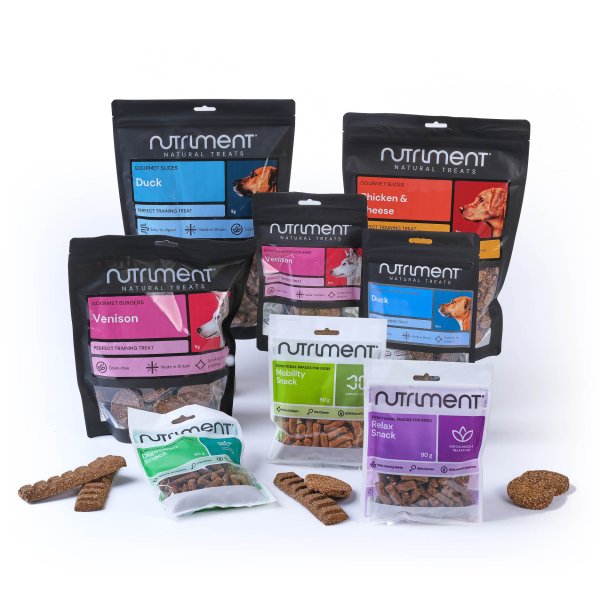

SUPPLEMENTS - PURE INGREDIENTS, POWERFUL RESULTS
As dogs age and/or face certain health challenges, they may benefit from additional nutrients beyond their regular diet. Supplements for dogs support overall health and address specific needs such as joint care, digestion, skin condition and immunity. Common supplements include vitamins and minerals for general wellness, omega fatty acids for healthy skin and coat, glucosamine and chondroitin for joint support and probiotics for digestive balance. When chosen carefully, supplements can help maintain mobility, strengthen the immune system and promote optimal organ function. You can find dog supplements made for a variety of health issues - some of the most common ones include:- Calming and anxiety aids
- Hip and joint supplements
- Multivitamin
- Probiotics, prebiotics and digestive enzymes
- Skin and coat
’’Supplements can help maintain mobility, strengthen the immune system, and promote optimal organ function.
DESIGNED TO DIRECTLY SUPPORT
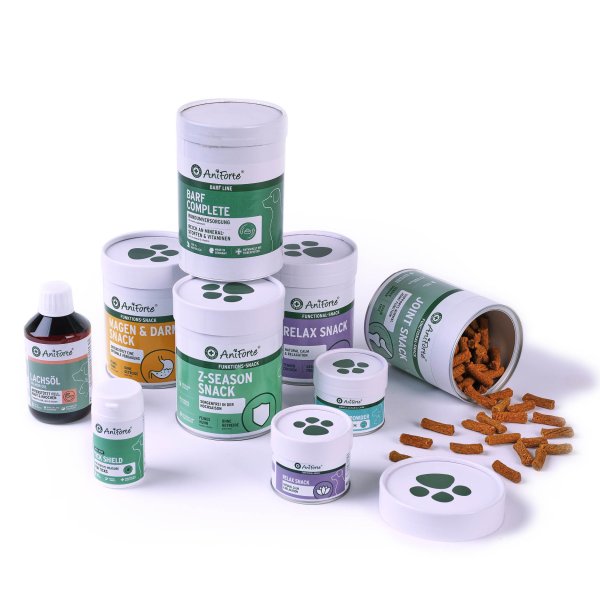
It is essential to select products specifically designed for dogs, as their nutritional needs differ from those of humans. Quality and proper dosing are crucial. Products should be tailored to the dog’s size, age, breed, and health status to ensure safety and effectiveness. Supplements are not a replacement for complete and balanced nutrition, but they can be a valuable addition to a comprehensive care plan. Always consult a veterinarian or experienced expert before introducing any new supplement to ensure it meets your dog’s individual needs. Our best options for:- Joint health: Aniforte® Joint Snack
- Best calming: Aniforte® Relax Snack
- Food topper: Aniforte® Canine Complete
- Best fish oil: Aniforte® Salmon Oil
- Best for dental care: Aniforte® Denta Snack
- Dogs who love the taste of coconut: Aniforte® Coconot Sticks
ANIFORTE® SALMON OIL - SUPPLY OF ESSENTIAL FATTY ACIDS
The valuable omega-3 fatty acids eicosapentaenoic acid (EPA) and docosahexaenoic acid (DHA) are abundant in our all-natural salmon oil for dogs. Your pet can't produce these in sufficient quantities on its own, as they can only be produced to a limited extent from α-linolenic acid (ALA). Therefore, these polyunsaturated, essential fatty acids should be supplied in sufficient quantities through our salmon oil for dogs. Grooming is a big issue, especially for long-haired dog breeds. Salmon oil can also help make grooming easier by making the coat less greasy and stringy. In combination with BARF, salmon oil is particularly interesting for dogs, as the health-promoting single feed is also an ideal BARF supplement.’’A sufficient supply of omega-3 fatty acids from our salmon oil provide the skin with the necessary long-chain fatty acids, and skin and coat health can be strengthened.
STUDIES PROVE POSITIVE EFFECTS OF OMEGA-3
Numerous scientific studies have already proven the positive effects of omega-3 fatty acids. Studies have shown that highly concentrated EPA can support the regulation of metabolism and the immune system and maintain your pet's overall well-being. A sufficient supply of omega-3 fatty acids from our salmon oil for dogs provide the skin with the necessary long-chain fatty acids, and skin and coat health can be strengthened. To ensure your pets can enjoy the benefits of fish oil, we paid close attention to the quality of the raw materials when selecting the oil. Only high-quality oil delivers the desired benefits. Therefore, you won't find any colourings or flavourings in our pure salmon oil for dogs. Instead, we offer you high quality from Norway and regular purity controls. Furthermore, our fish oil is sourced exclusively from sustainable fish farms. Our AniForte® Salmon Oil impresses with the highest quality standards and contributes to the health of your animals – premium quality fish oil: because your animal deserves only the best!FAQs
What are food supplements for dogs?
Food supplements for dogs are concentrated additions designed to provide specific nutrients in a targeted way, such as vitamins, minerals, fatty acids or functional plant compounds. Unlike complete feeds, which must fully meet a dog’s daily nutritional requirements, and complementary feeds for dogs, which contain larger quantities of individual feed materials, for example tinned meat, vegetable or herbal mixes, supplements are used to fine tune and optimise the diet with precision.
From a regulatory perspective, they are classified as specialised feed supplements for dogs, used only in small amounts and intended for a clearly defined purpose.
From a regulatory perspective, they are classified as specialised feed supplements for dogs, used only in small amounts and intended for a clearly defined purpose.
Which vitamins and minerals does a dog need?
Vitamins and minerals for dogs are essential micronutrients that regulate key bodily functions. The most important vitamins for dogs include vitamins A, D, E and K, as well as various B vitamins and vitamin C. Equally essential are minerals for dogs such as calcium, phosphorus, magnesium, zinc, iron, iodine, copper and selenium. Among other things, they support a strong immune system, healthy bones and teeth, proper nerve function, as well as a shiny coat and healthy skin.
When does a dog need food supplements?
Food supplements for dogs can be useful or even necessary in certain life stages or situations. Puppies during growth, sporting and working dogs, pregnant or nursing bitches, as well as senior dogs, often have an increased need for key nutrients. In particular, targeted vitamins for older dogs can help support the immune system, metabolism and overall vitality. Typical signs that a dog may need additional nutrients include a dull coat, increased hair loss, joint problems or low energy levels. In cases involving the musculoskeletal system, a suitable supplement for dogs with arthritis, for example with omega 3 fatty acids, green lipped mussel or collagen, can help improve mobility.
Which food supplements are useful for dogs?
Suitable food supplements should always be chosen according to the intended area of effect. For coat and skin, high quality oils as well as targeted vitamins such as vitamin E for dogs are appropriate, as they support cell protection and promote a glossy coat. A well balanced vitamin B complex for dogs can also have a positive effect on skin, the nervous system and metabolism.
For joints and mobility, specific supplements such as green lipped mussel, collagen, hyaluronic acid or omega 3 fatty acids may be considered. These products are often used as supplements for dogs with arthritis to help reduce inflammation and support mobility. Joint support supplements for dogs can be particularly beneficial for older dogs or active sporting dogs.
To strengthen the immune system and natural defences, antioxidant vitamins, certain medicinal plants or probiotics are commonly used. For digestion and nutrient absorption, prebiotics and probiotics, enzymes or herbal blends can help to stabilise the gut flora and improve the utilisation of food.
In general, a distinction can be made between natural supplements, for example herbs, mussel extracts and oils, and synthetic options such as isolated vitamins, minerals or targeted active complexes. Natural supplements are often better tolerated, while synthetic products allow for more precise dosing. The ideal choice depends on the individual needs and health condition of the dog.
For joints and mobility, specific supplements such as green lipped mussel, collagen, hyaluronic acid or omega 3 fatty acids may be considered. These products are often used as supplements for dogs with arthritis to help reduce inflammation and support mobility. Joint support supplements for dogs can be particularly beneficial for older dogs or active sporting dogs.
To strengthen the immune system and natural defences, antioxidant vitamins, certain medicinal plants or probiotics are commonly used. For digestion and nutrient absorption, prebiotics and probiotics, enzymes or herbal blends can help to stabilise the gut flora and improve the utilisation of food.
In general, a distinction can be made between natural supplements, for example herbs, mussel extracts and oils, and synthetic options such as isolated vitamins, minerals or targeted active complexes. Natural supplements are often better tolerated, while synthetic products allow for more precise dosing. The ideal choice depends on the individual needs and health condition of the dog.
Food supplements for senior dogs – what is important?
As dogs get older, their metabolism, digestion and muscle strength naturally change, which means their need for certain vitamins and minerals can increase. In particular, antioxidant vitamins, omega 3 fatty acids, joint-supporting nutrients and easily absorbed minerals play an important role in supporting the immune system, heart, nerves and mobility. The goal is to help reduce the impact of age-related changes and maintain overall vitality.
Special food supplements for senior dogs often contain vitamin B for nerves and energy, vitamin E for cell protection, glucosamine and chondroitin for joints, as well as probiotics for stable digestion. Such vitamins for older dogs can help prevent a decline in performance, coat changes or joint stiffness.
Special food supplements for senior dogs often contain vitamin B for nerves and energy, vitamin E for cell protection, glucosamine and chondroitin for joints, as well as probiotics for stable digestion. Such vitamins for older dogs can help prevent a decline in performance, coat changes or joint stiffness.
How often should salmon oil be giving to my dog?
Ideally, salmon oil should be administered daily. For dogs, the recommended dose is 1 teaspoon per 10 kg of body weight. For cats ¼ teaspoon and for horses/ponies 2 teaspoons per 100 kg body weight. To increase acceptance by the animals, it is ideally administered through food.




Other categories
My shopping cart
Your shopping cart is currently empty.
My Wishlist
Please sign in to your Antos Account to save items to your wish list.

Select 2-3 products to compare
Secure shopping
Your security is important to us. For full details of how we protect your payment en personal details, please read our Privacy Policy.